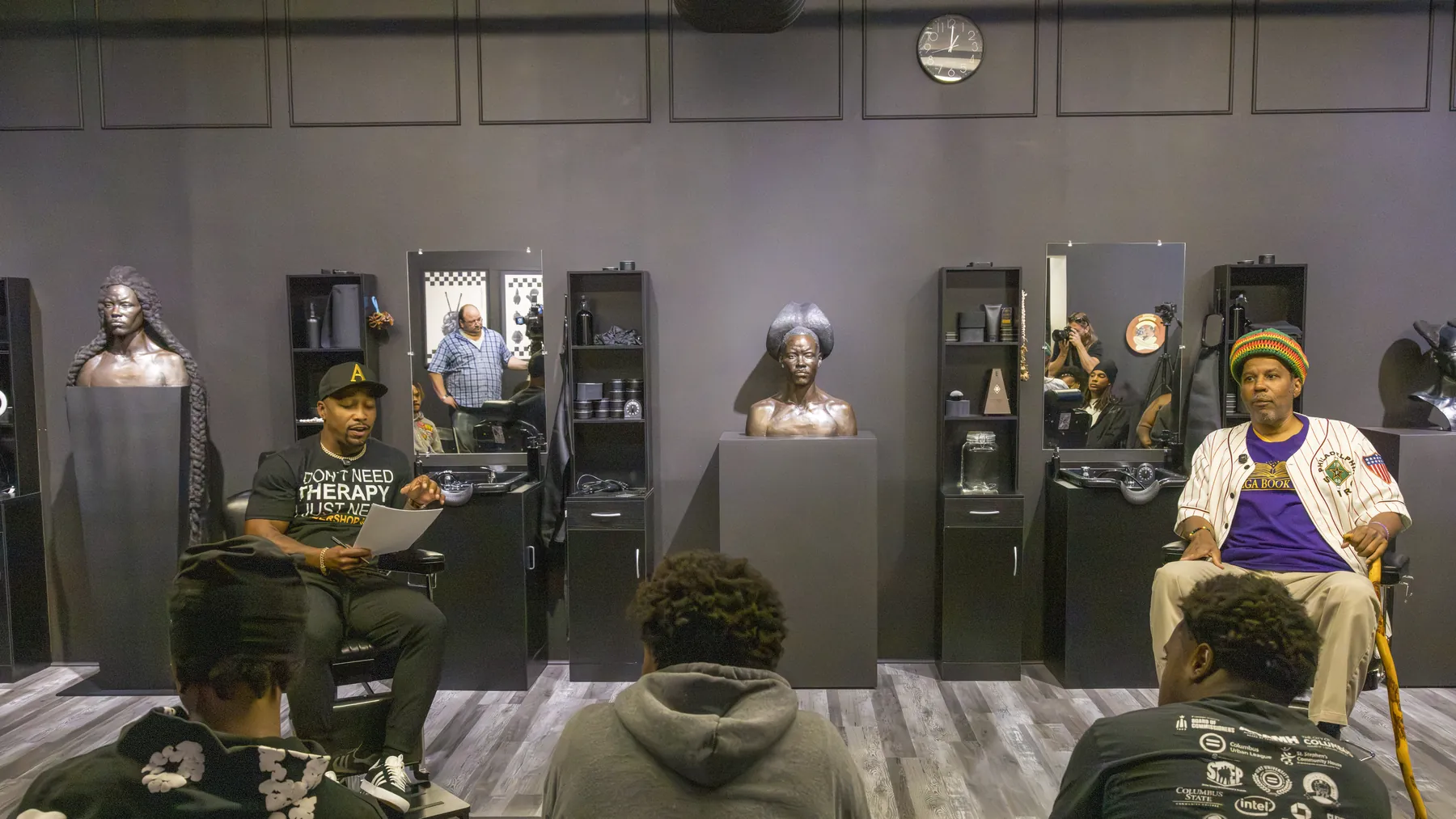
Every organization wants the photograph of the speaker. Very few think to ask for the photograph of the room. That second image is often the one that does the most work.
A close frame of a keynote tells you someone spoke. A wide frame tells you how many people came to listen, who they were, and what the space looked like while your mission was actually happening. When a program officer reads your grant report, or a board member asks whether last year's event deserves funding again, the wide shot answers without a word of explanation.
What a funder needs to see
Grant reports, annual reports, and impact summaries all make the same claim in different language: we did the work, and people were served. Words carry that claim part of the way. Images carry it the rest. A full room. A line at the registration table. Volunteers setting up before the doors open. Participants working through the material instead of only listening to it. Those frames show scale and participation, and they are very difficult to recreate after the fact.
This is why I document an event in layers. The program itself, the speakers and honorees, is one layer. The room is another. The process is a third: the setup, the hallway conversations, the people doing the quiet labor that makes the event possible. Each layer answers a different question someone will ask later.
A close frame tells you someone spoke. A wide frame tells you who came to listen.
The frames nobody requests
When I prepare for a program, I look for the moments that rarely appear on a shot list. The empty room before guests arrive, because it shows how the space was set. The signage and banners, because they date the event and name the occasion. The crowd from behind, because it holds the audience and the stage in one frame. The handoff of materials, the screening table, the sign-in sheet in use. None of these is the image that goes on social media the next morning. All of them are useful the following year.
Attendance is the clearest example. A number in a report is a claim. A wide photograph of a full room is a record. For organizations that depend on public trust and outside funding, that difference matters.
Planning for the record
None of this requires more time on site. It requires a conversation before the event. Tell whoever is documenting your program which outcomes you will need to show, whether that is reach, participation, or community, and the coverage can be built around proving them. Ten minutes of planning is worth more than hours of searching afterward. I walk through that preparation in how I prepare for a full-day event, and the broader case for documenting with the future in mind is in the photographs your organization will need in ten years.
The speaker will always get photographed. Make sure someone is also recording the room, because years from now, the room is what proves the work happened.
Dwain Thomas