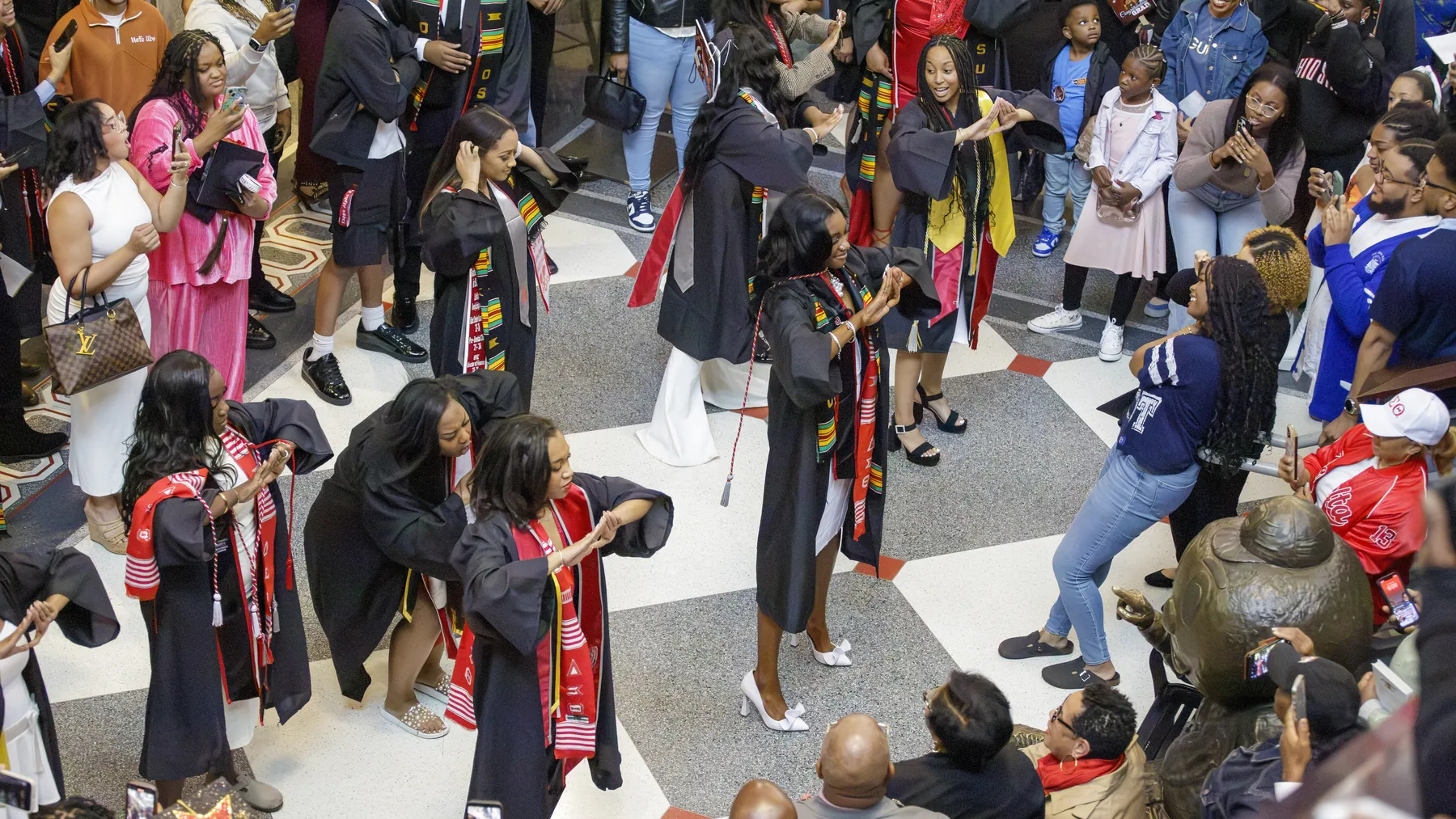
An archive full of faces nobody can name is not much of an archive. It is a collection of strangers.
Every organization has a version of this box, physical or digital: photographs from a gala, a groundbreaking, a community day, with a room full of people who clearly mattered and no record of who they were. The person who could have identified them retired, or moved, or passed. The images survived. The knowledge did not.
Why names disappear so fast
At the event itself, everyone knows everyone. The board chair, the honoree's family, the volunteer who has run the registration table for a decade. Writing any of it down feels unnecessary. Within a few years, staff turns over, the board rotates, and the context that made those images meaningful is gone.
Missing identification is one of the most common gaps in an organizational photo archive, and one of the easiest to close. It costs nothing but attention at the right moment.
The images survive. The knowledge of who is in them does not, unless someone writes it down.
What I ask for before the event
Before a program, I ask for the run of show and a short list of the people who matter most to the organization's story: founders, board members, honorees, major supporters, longtime staff and volunteers. That list does two things. It makes sure those people are documented deliberately, and it gives us a way to identify them afterward.
During the event, a point person on your team who knows the room is worth more than anything in my camera bag. A quiet word, that is the founder's daughter, or he has volunteered here for twenty years, turns an ordinary frame into a historical one.
What happens after delivery
The work does not end when the gallery arrives. Within a week or two, while memories are fresh, someone on your team should go through the key images and record names, roles, and the occasion. It can be as simple as a spreadsheet with file names in one column and names in the next. Better still, write the identification into each image's caption field, which most photo software can read, so the names travel with the file wherever it goes. The method matters less than doing it before the details fade.
Date everything. Name the event. Note the location. These details feel obvious now. In fifteen years they will be the questions nobody can answer. Identification starts long before delivery, with the people you choose to document deliberately, which I cover in what institutional clients actually need.
A photograph can hold a face for a century. Only a name tells anyone whose face it was. Write it down now, while someone still remembers.
Dwain Thomas